


By Sofia Perez
[Published by Forbes, December 5, 2024]
The last time I went to an all-inclusive resort, George H. W. Bush was president. While that visit to Club Med in the Bahamas included sailing lessons, a tour of Nassau and a cocktail or three on the beach, I could not tell you the first thing about what I ate. Since then, my appetite for exploring local food scenes has driven me away from all-inclusives in favor of my own improvised tours of a destination—that is, until my circumstances changed earlier this year.
My elderly mom wanted to take a beach vacation. We’re both adventurous eaters and love sampling cuisines, but an all-inclusive seemed the best match for her decreased mobility and energy level. Once we’d decided to go this route, I resigned myself to an uninspiring dining experience, but after exploring the possibilities, I was pleasantly surprised by what I found.
In the early days of all-inclusives, food quality was not most tourists’ primary concern. “You were just supposed to be happy that you didn’t have to get out your wallet,” says Peter Greenberg, CBS News travel editor and industry expert. But attitudes are changing. “Today’s traveler is not just looking for price—they’re looking for value. The companies that adapt faster are going to do really well on their bottom line.”
These shifts are visible at resorts like the Grand Velas Riviera Maya in Mexico, where guests can dine at Cocina de Autor, a Michelin-starred restaurant helmed by chef Nahúm Velasco, who pairs bone marrow and caviar, and serves up tuna paired with smoked cream, “sea bacon” and pasilla peppers. At Montana’s Triple Creek Ranch, a Relais & Châteaux property with two Michelin stars, chef Jacob Leatherman’s menus change daily and include options like seared sage-and-mustard pheasant, kanpachi poke and sautéed brown-butter ribeye. Greenberg was impressed by the Le Blanc all-inclusive in Cancun, where he got to choose from a plethora of freshly made ice creams and sorbets.
If it’s local spirits you’re after, Hilton’s Tulum Riviera Maya hosts a weekly “Agave Fest” at its Maxal Mezcalería. Beyond tequila and mezcal, visitors can also sample pulque, raicilla, bacanora and sotol, while chowing down on birria and barbacoa. And for those traveling with kids, the Grand Velas in Cabo San Lucas hosts workshops where your little ones can learn to make paletas (fruit popsicles), palanqueta (a kind of peanut brittle) and other Mexican desserts.
A Café That’ll Wake Up Your Taste Buds
After doing my research, Mom and I settled on Dunn’s River, Sandals’ newest property in Jamaica, where the parent company is headquartered. Located on the island’s north coast, Dunn’s River caught my eye for its culinary offerings, including Blūm, a café concept that debuted when the property opened last year. As someone who is passionate about coffee (okay, obsessive is more accurate), I was excited to sample the brews made with arabica beans grown in Jamaica’s famed Blue Mountains.
While all Sandals properties serve up Blue Mountain coffee exclusively, the resort’s Café de Paris concept used to be the main place to sate you caffeine cravings. “They’re good, of course, but not really Caribbean,” says Luke Mathot, Sandals’ VP of food and beverage product innovation. “We were founded in the Caribbean, and we’re only in the Caribbean. With Dunn’s River being so close to the Blue Mountains, we wanted to showcase the local bounty and tell that story.”
Open all day, Blūm offers a variety of coffee-preparation methods (pour-over, espresso, Kyoto-style cold brew) and drink combinations, such as a mochaccino made with Jamaican chocolate, and boozy options like the Black Pearl (cold-brew coffee with Jamaican rum and Tia Maria, a cold-brew coffee liqueur). The pour-over was some of the smoothest coffee I’ve ever tasted and paired beautifully with the desserts, which included gizzada, a Jamaican tart with a sweet toasted-coconut filling in a sugar-dough shell; coffee cake made with Blue Mountain cold brew; and a brown sugar plantain tart, featuring sweetened boiled plantains wrapped in layers of buttery puff pastry.
Tasting Through Rums With A Snack On The Side
You cannot talk about Caribbean bounty without mentioning pirate’s drink, kill devil or any of rum’s other monikers. For an insightful look at the drink’s complicated history, read Wayne Curtis’ And A Bottle of Rum, but the best way to get a handle on the many styles is to taste them. As you step inside the Rum Club at Dunn’s River—which actually does feel quite clubby, done up in dark wood and leather furniture, with a pool table up front—it’s not hard to picture Ernest Hemingway ensconced at the bar, tossing back a Papa Doble, the double-rum daiquiri christened with his nickname.
The bar stocks between 30 and 40 types of rum, including 24 from Jamaica. Choose from bottlings produced in column or pot stills (or both), molasses-based rums (the most common style in Jamaica) or grassier rhums made from sugarcane syrup. Stop by before dinner for a mojito or a painkiller, or try a flight of the Jamaican rums, from Appleton Estate’s smooth 8 YO reserve, to the raw power of J. Wray & Nephew’s white overproof, at 63% alcohol.
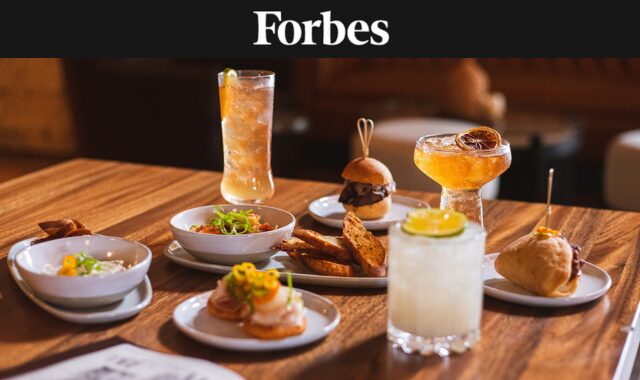
You’ll want to pair all that booze with the excellent small plates, which are inspired by classic local recipes. Try the oxtail sliders, served up on coco bread (made with coconut milk) or the smoked marlin escovitch, a tangy and spicy mixture that comes on a fried bammy (cassava flatbread).
Highlighting Jamaica’s Signature Cooking Style
Thanks to food options like these, Sandals has become a culinary leader among all-inclusives, as well as being the first chain to offer off-property dining via its “Island Inclusive” program. (Guests receive a voucher that they can use at selected area restaurants.) Rolled out in 2022 at the Curaçao location, the program expanded to the Royal Bahamian resort in 2023 and will soon be available at Dunn’s River.
While Mom and I took all of our meals on property, we made it a point to visit the Jerk Shack twice. At this casual eatery on the beach, the pepperpot soup wakes up your mouth with the bright, spicy notes of Scotch bonnet chiles—the island’s premiere heat source, after the sun. But the star of the menu is the famed local style of cooking, which started as a food-preservation technique before becoming known for its distinctive flavor. “Jerk is Jamaican, and Jamaica is jerk,” says Rockwaine Barnett, the executive sous chef at Dunn’s River.
An All-Inclusive Staying True To Local Roots
Barnett should know, having grown up not far from the resort. While he left the island years ago to work on the French Riviera, in Russia and on cruise ships, he is glad to be home again. For Barnett and his mostly Jamaican kitchen team, highlighting their country’s food is a source of pride. “Obviously, we’re catering to people from all walks of life, and they can still have the food they’re used to, but we also want them to get a feel for what we would typically eat here.”
At the moment, top-notch culinary options like these remain mostly the domain of high-end all-inclusives, but that won’t be the case for long, says Greenberg. “A rising tide will lift all boats, and as the middle and lower level see what’s going on, they’ll have no choice but to adjust, because people will want to upgrade their experience.”